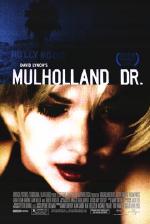
 David Lynch's feature
film Mulholland Drive was made as the pilot episode of a projected
TV show for the American company ABC, hoping to repeat the success of the
writer/directors cult early nineties series Twin Peaks. ABC passed
on the result, fearing its art-house pacing and weird twists would have a
mainstream audience going for their remotes. They were probably right, although
the story is intriguing, and the characters sympathetic enough to have bewitched
viewers looking for something different. Funding from French channel Canal
Plus has allowed Lynch to add a final, concluding third to the story. Although
the first section is strong, the overall result is compromised, the third
such of Lynch's career, after the heavily re-cut Dune and Twin
Peaks: Fire Walk With Me. Like Fire Walk With Me, Mulholland
Drive has many moments of greatness. But it also shares the feeling of
incompleteness. The film's many cameo roles lead nowhere, the central characters
abruptly move from the start of their affair to its end, and while all the
connections to decode the surreal story are present, they feel tacked on,
rather than natural.
David Lynch's feature
film Mulholland Drive was made as the pilot episode of a projected
TV show for the American company ABC, hoping to repeat the success of the
writer/directors cult early nineties series Twin Peaks. ABC passed
on the result, fearing its art-house pacing and weird twists would have a
mainstream audience going for their remotes. They were probably right, although
the story is intriguing, and the characters sympathetic enough to have bewitched
viewers looking for something different. Funding from French channel Canal
Plus has allowed Lynch to add a final, concluding third to the story. Although
the first section is strong, the overall result is compromised, the third
such of Lynch's career, after the heavily re-cut Dune and Twin
Peaks: Fire Walk With Me. Like Fire Walk With Me, Mulholland
Drive has many moments of greatness. But it also shares the feeling of
incompleteness. The film's many cameo roles lead nowhere, the central characters
abruptly move from the start of their affair to its end, and while all the
connections to decode the surreal story are present, they feel tacked on,
rather than natural.
The opening moments may be Lynch's scariest ever: wholesome teens dancing in what looks very like a Gap advert. So the next scene is a relief, a welcome return to Lynch's moody noir style, as a black limousine drives along a dark road, and the headlights eerily illuminate the road sign 'Mulholland Drive'. In the back of the car, a glamorous woman (Laura Elena Harring) is about to be murdered, but is saved by a crash. The only survivor, and suffering from amnesia, she staggers into a flat, where she is discovered and befriended by perky aspiring actress Betty Elms (Naomi Watts). The woman decides to call herself Rita, after a Rita Hayworth movie poster in the flat. Betty decides to help Rita find out who she really is, and they begin their search, discovering disturbing clues. This set-up is interesting, and although the characters lack the larger-than-life appeal of Twin Peaks, they are warm and easy to identify with. Naomi Watts is particularly great as Betty, and goes through a range of guises, from innocent to sexy and finally decadent. It is easy to assume that a continuing series would have had Betty and Rita discovering more information each week, with Rita's innocent beginning giving way to revelations of a shady past.
Meanwhile, film director Adam Kesher (Justin Theroux) discovers that sinister Mafia-style money men control what he assumed were his artistic decisions, as he is told he must cast blonde Camilla Rhodes (Melissa George) as the lead in his new film. After refusal gets him a taste of life at the bottom, Kesher accepts the casting choice. He is instructed to meet The Cowboy (Monty Montgomery), a strange, threatening figure who will be watching him. Betty and Rita become romantically involved, as they follow their leads to a discovery that abruptly changes everything, leading to a frightening conclusion. The pilot section of Mulholland Drive often shows its origins in television. While the creepy style of Lynch's Lost Highway is partly continued as the camera floats along long dark corridors, the conversations are shot more conventionally, there are more close-ups, and fade-outs signal ad breaks. The final third of the film abruptly breaks with this style, and is more cinematic, announcing its freedom with the sudden inclusion of nudity, lesbian sex, drug taking and other TV unfriendly scenes. This final third is powerful, and the sudden reversal replaces the linear story of the first part with the full strength surrealist weirdness Lynch is known for. Taking its cue from The Exorcist, The Devil in Miss Jones, Hellraiser, and Lost Highway, this part has a claustrophobic, disorientating atmosphere, which is both frighteningly and dementedly silly. It feels like an easy way out, uses the oldest twist of all time, and although it explains some of the problems of the first part (such as why Betty doesn't seriously call the police), it lacks the surprise of Lynch's earlier films.
The film explores the theme of the artifice involved in making movies. Betty's audition highlights the falsity of an actors apparent emotions, while also sweeping us up in those same feelings. The visit to Club Silencio continues this theme, with the singer Rebekah Del Rio, whose seemingly emotional Spanish version of Roy Orbison's Crying echoes Dean Stockwell's lip synched In Dreams in Blue Velvet. The choice of Orbison's elaborately produced music fits this theme: something which seems natural and emotionally true, but is in fact carefully planned out, arranged and recorded, all to give the impression of spontaneous emotion. This is also Lynch's technique: films with the seemingly easy quality of a dream, as if they have always existed, and have been plucked out of the air, but are in fact carefully created. The most pleasurable films are those which let the audience go along with them, letting them drift into an accepting alpha state. Lynch encourages viewers to succumb to this feeling, by supplying a story and characters that seem to easy to go along with, then turning things around. Unlike puzzle based detective films, or curios like Memento or The Spanish Prisoner, Mulholland Drive isn't hard work. Its easy to watch, but the conclusion demands further thought, in order to make sense of it.
Adrian Horrocks
See also:
Blue
Velvet
Lost
Highway
| HOME | NEW? | REVIEWS | FEATURE | FEEDBACK | MAGAZINE | LINKS | ©-DSO |